
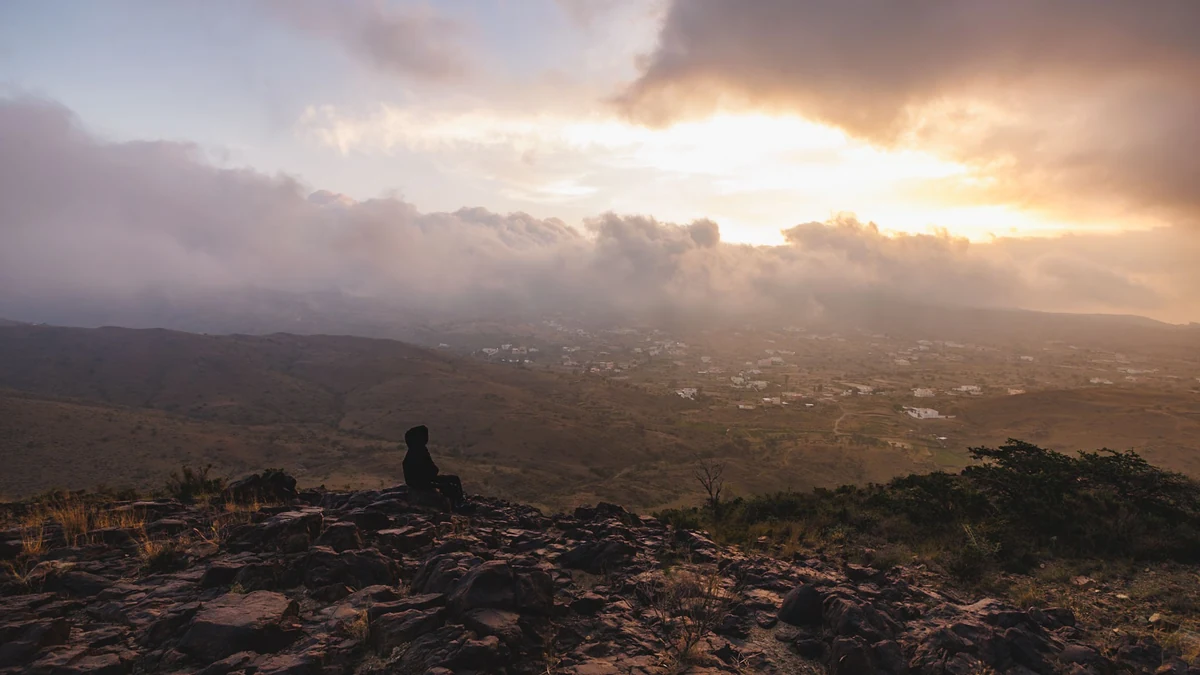
In this Asir collection, the mountains never quite become a single solid shape. Near ridges hold rough detail; distant slopes soften into lighter bands. Cloud sometimes closes the view, and sometimes leaves a narrow opening for light.
The photographs below offer three ways into the collection: follow the layers, look at the foreground, and watch what happens where the sky opens. These are observations of the images, rather than a reconstruction of the trip.
Let the layers carry the eye
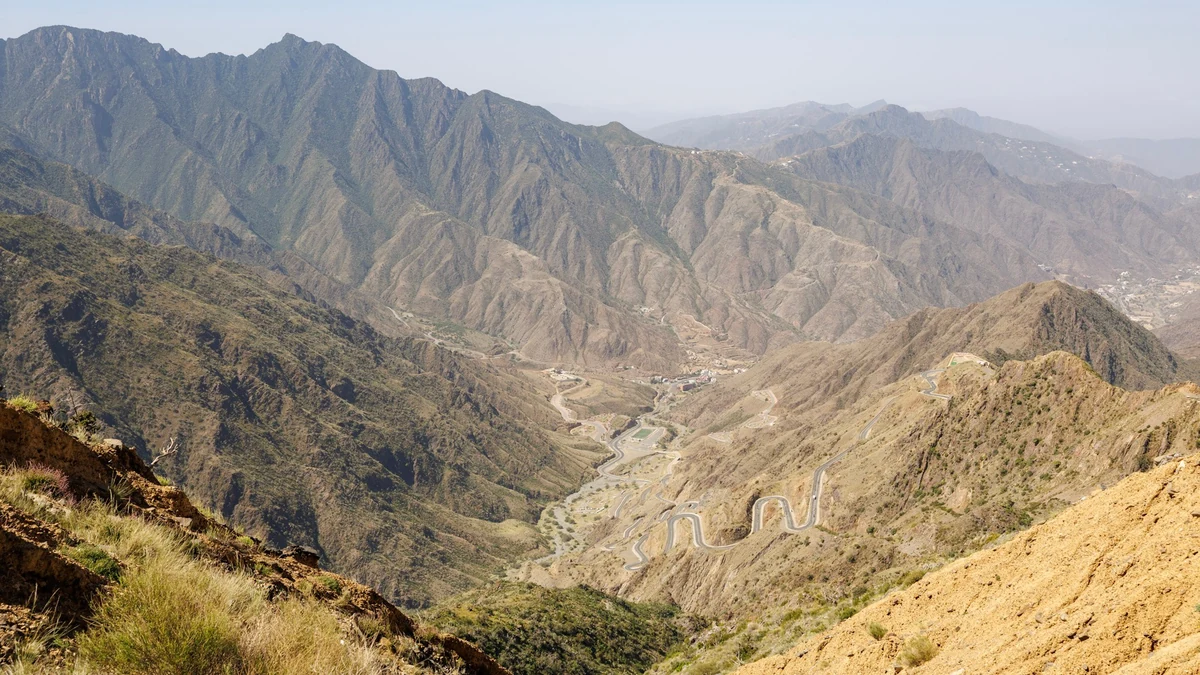
In “The folds of the mountains”, the closest slope is detailed and textured while more distant ridges become hazier. Look from the bottom edge towards the horizon: the changing tones give the scene its depth.
“Layer upon layer” gives the foreground more weight, with rough stone close to the camera. Compare the two photographs and notice how much of your attention stays near the frame before moving into the valley.
Give the light a smaller stage
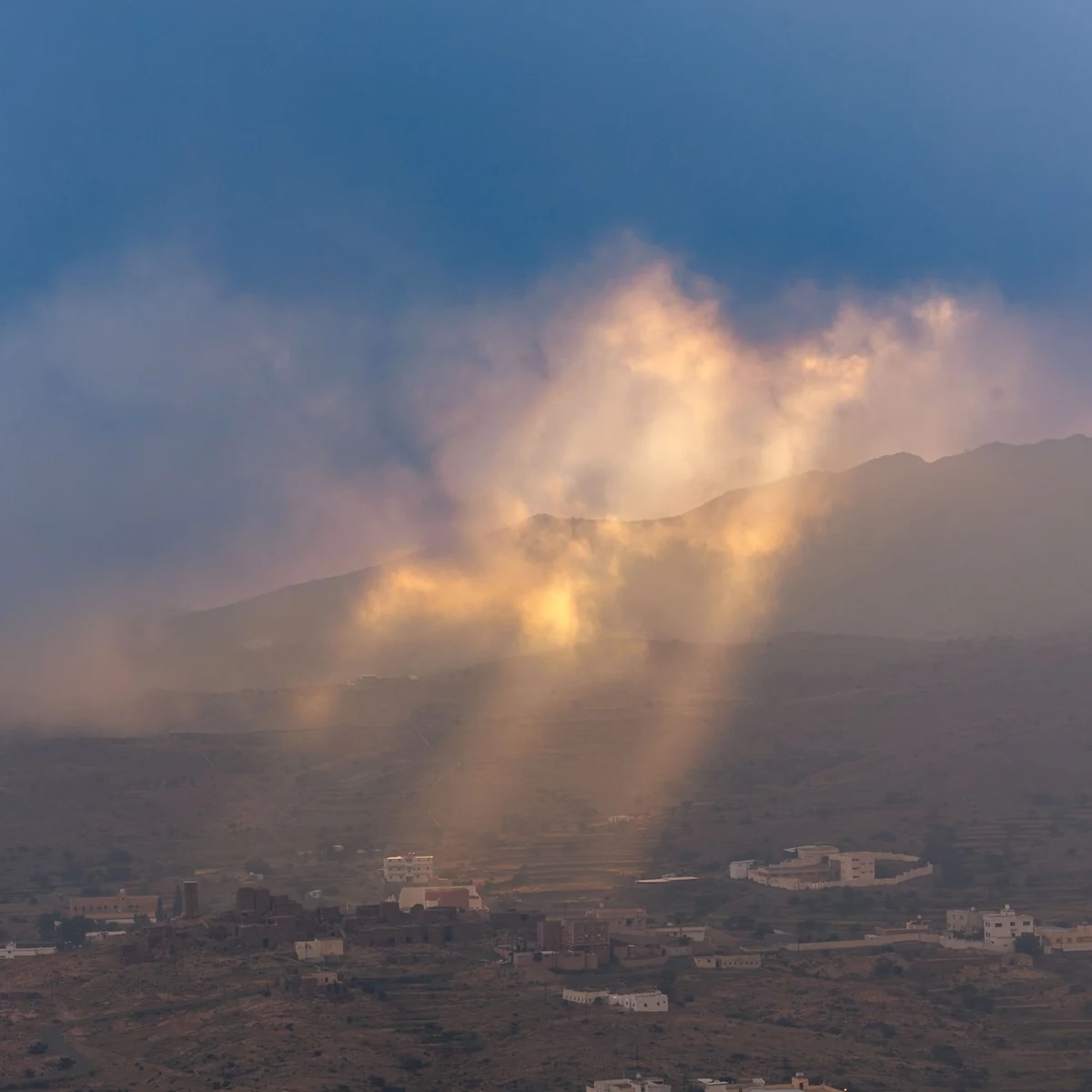
“Light through the storm” brings the bright shafts of light closer. Instead of treating the whole sky as the subject, the photograph gathers attention around the break in the cloud and the buildings below it.
Its file records a focal length of 108 mm. The wide mountain view above records 35 mm. Those are facts about these two frames; they do not tell us exactly where the camera was standing or why the settings were chosen.
Finish after the light changes
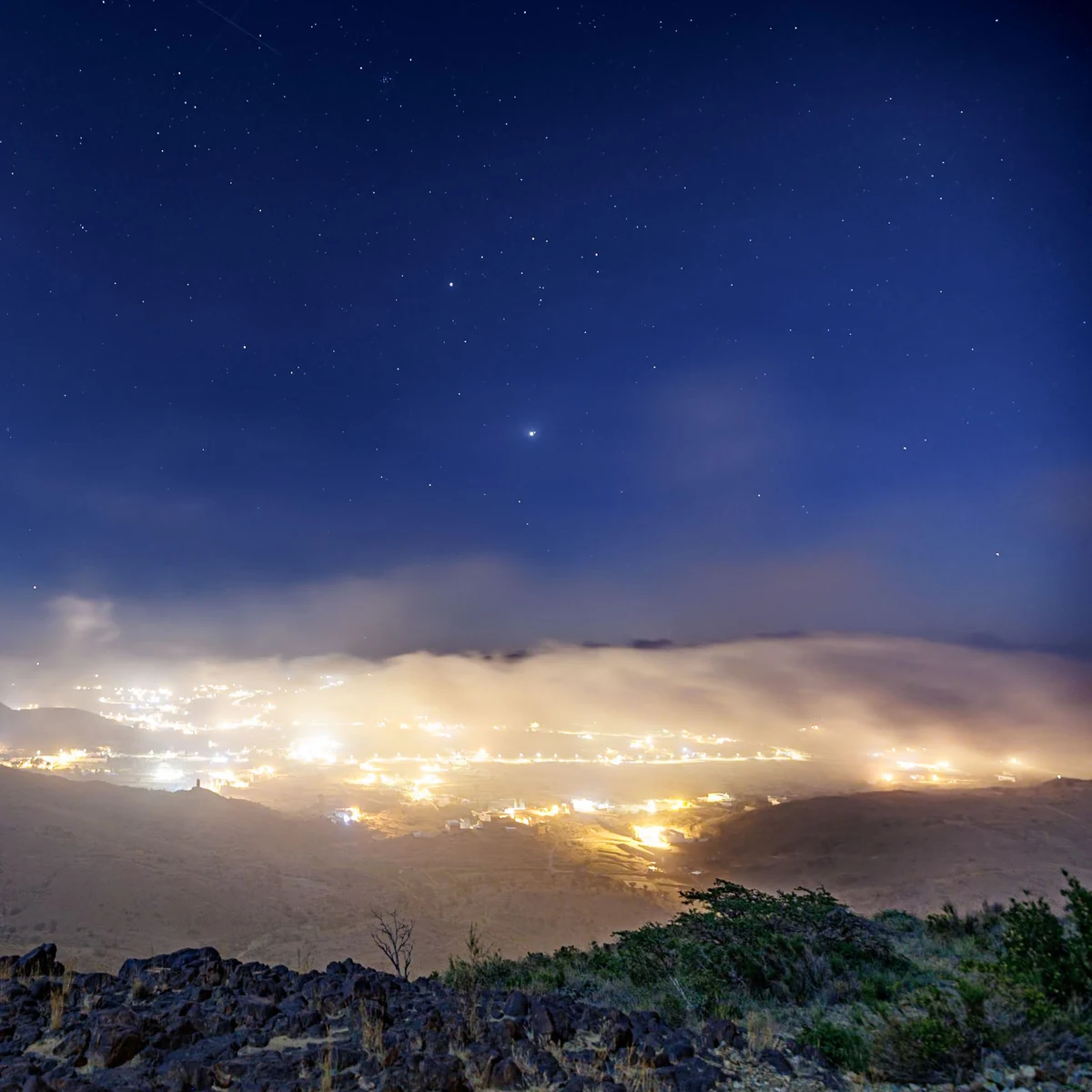
“Above the clouds after dark” changes the balance again. Stars occupy the upper part of the picture while lights glow through the cloud below. The dark ridge in front gives the brighter scene a boundary.
Open the photograph to see its recorded 13-second exposure, f/2.8 aperture and ISO 500. The settings provide context, but they cannot describe every choice made during capture or editing.
Editorial notes researched and prepared with AI assistance.
← Back to the blog