A city photograph can hold a great deal at once: people, signs, buildings and sky. The New York collection offers useful examples of how a frame becomes easier to read when one relationship stands out.
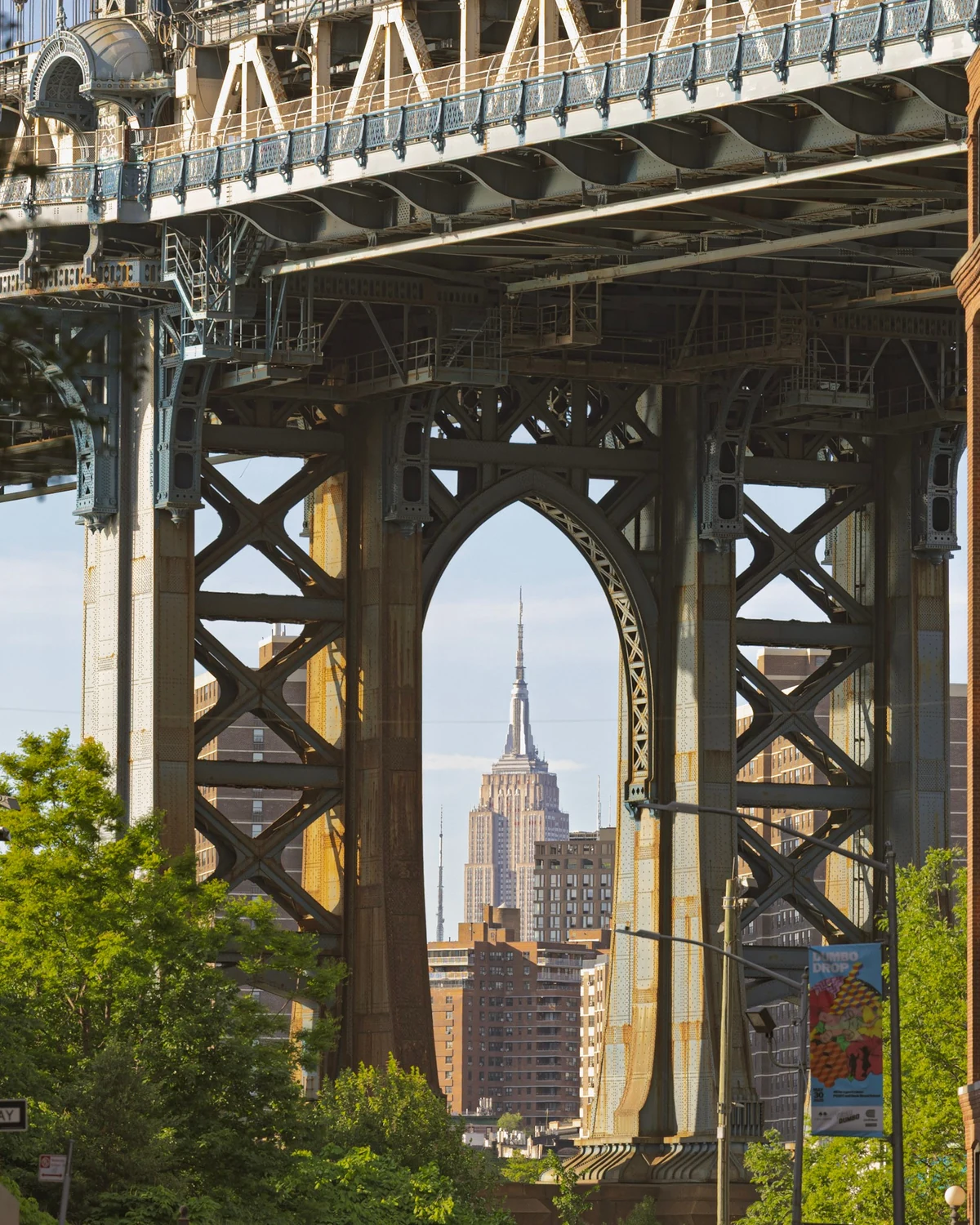
Start with the distant tower held inside a bridge arch. The structure around it gives the eye a place to settle, even with several layers of the city in view.
Follow a line into the picture
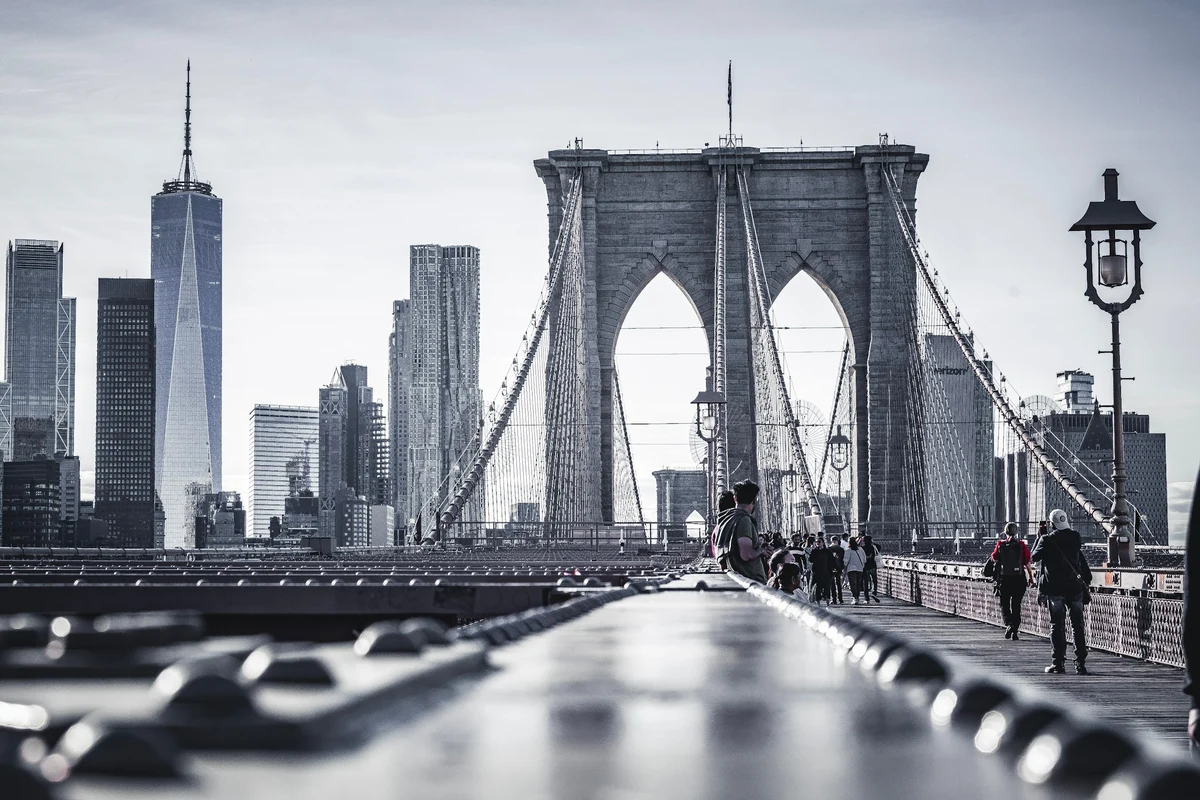
In “Across the bridge”, rivets and bridge structure point into the scene while pedestrians provide a sense of scale. Trace the lines from the foreground towards the arches and skyline.
For your own photographs, look for a path the eye can follow: a railing, a shadow or an edge of pavement. Change your position slightly and compare whether the line strengthens the subject or pulls attention away.
Further reading: Canon — Composition tips for city photography
Look up, then look within
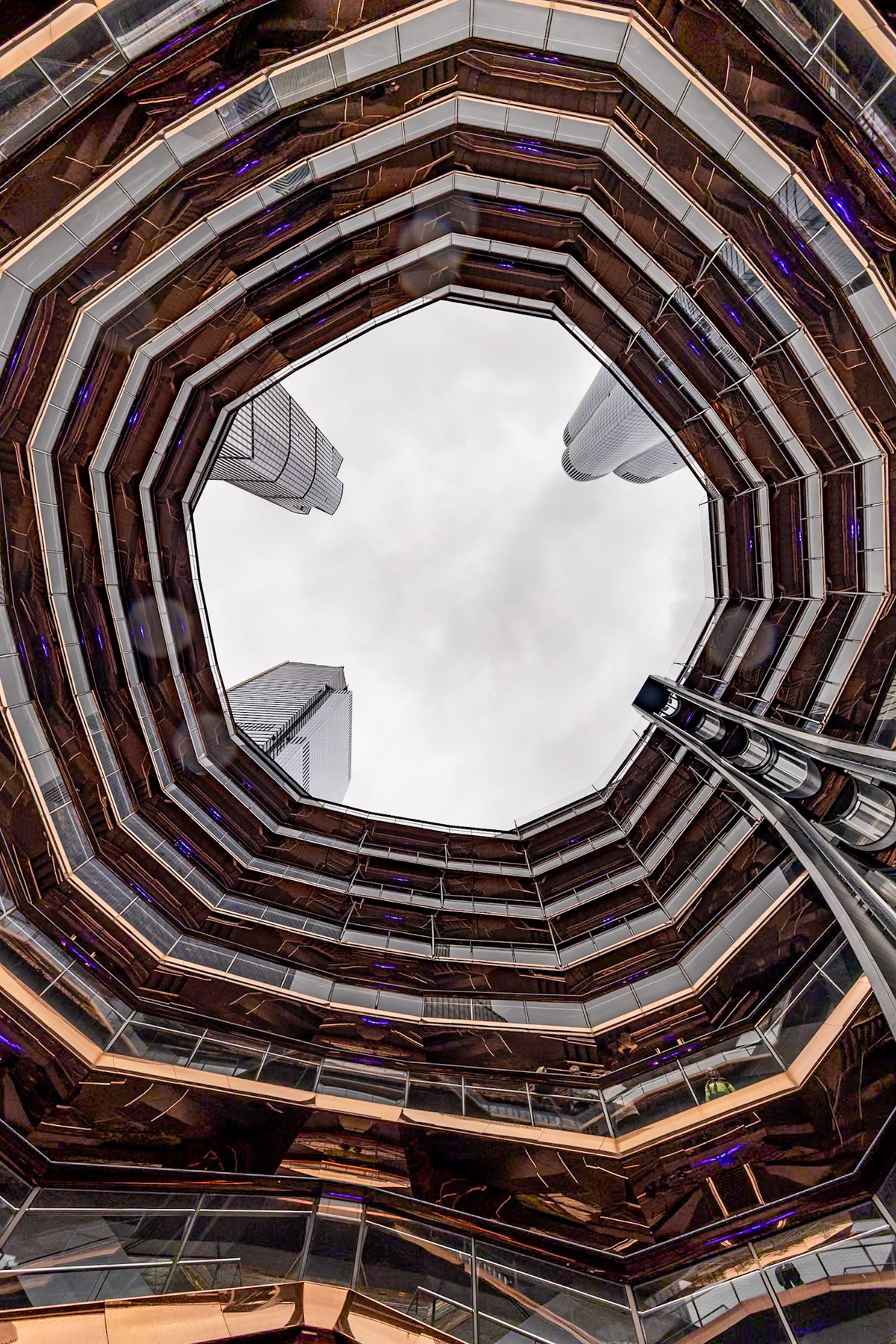
“The city, looking up” replaces the usual street-level view with tiers of copper-coloured stairs around an opening to the sky. The repeating forms become the subject.
In “A city within a frame”, the direction is outward again. A distant tower sits inside the bridge arch. Looking upward and looking through are two different ways of simplifying a busy setting.
Further reading: Canon — Composition tips for city photography
Let reflected light connect the frame
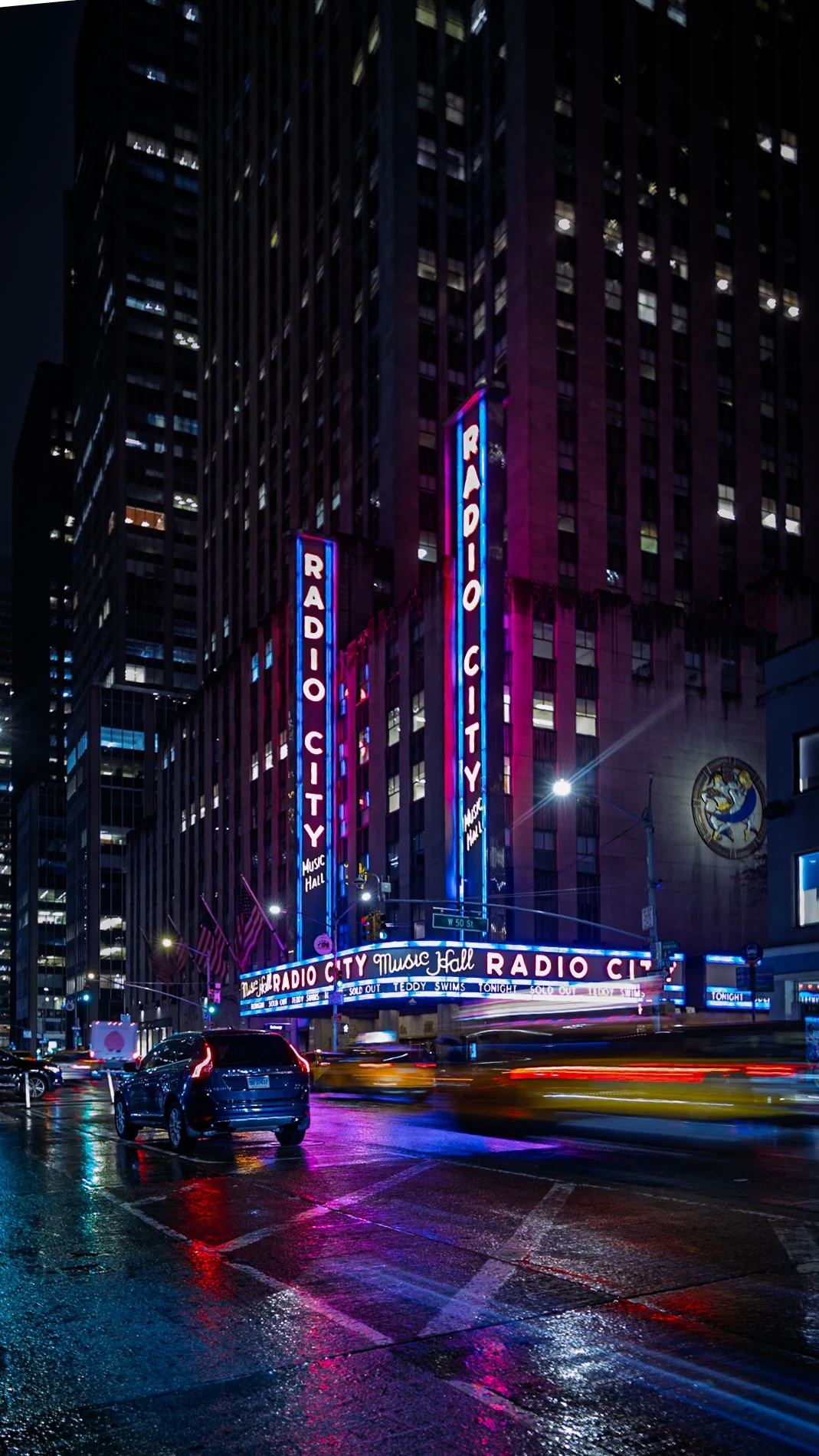
In “Neon after the rain”, the colour of the signs continues into the wet street. The reflection joins the upper and lower parts of the photograph, bringing the roadway into the composition.
Compare it with the darker waterfront images in the New York gallery. Ask where the brightest colour sits, and whether it gives the frame a clear centre or a route to follow.
Editorial notes researched and prepared with AI assistance.
← Back to the blog